

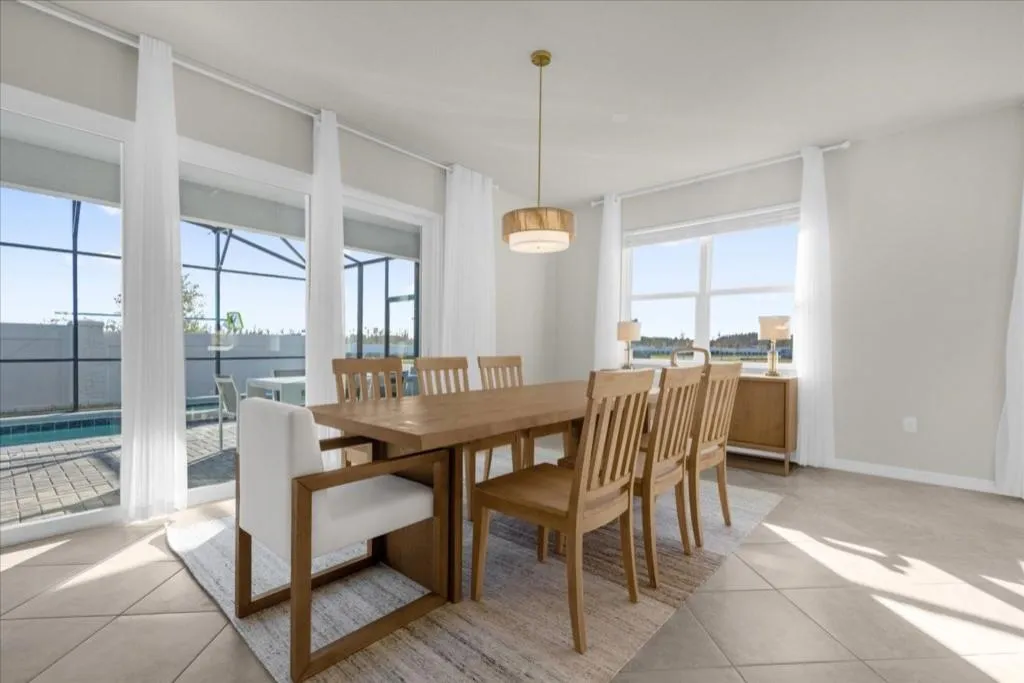
Lanai and Outdoor Furniture for a Vacation Rental
In Orlando, the lanai and pool deck are not extras. Guests spend a large part of their stay outdoors, and a rental with a private pool lives or dies by how that space looks and feels. It's also where furniture takes the hardest beating: sun, rain, chlorine, wind and a steady stream of wet guests.
This guide is how we plan outdoor furniture for a Florida vacation rental: what to put where, which materials hold up, how to deal with sun and wind and how to keep it looking good. It's about furnishing, not construction. For the design side of the space, see our outdoor pool area design guide. See what our vacation rental furniture packages include.
Check the rules first
Before you buy, check your HOA and resort rules. Some communities limit what can be visible from the street or the neighbors, including umbrellas, structures and certain furniture. Some limit fire features and cooking equipment. Ask for the rules in writing, and plan the space within them.
Plan the space by how guests use it
A lanai is usually several spaces in one. Think about what guests do there:
Eating: a table with enough seats for the group, ideally near the kitchen door. A table that seats the group outside takes pressure off the dining room.
Lounging: loungers or chairs by the pool for sunbathing, with side tables for drinks.
Conversation: a sofa or a set of chairs in the shade, where adults can sit while kids swim.
Kids' space: a spot for towels and toys that doesn't clutter the walkways.
A small lanai may only fit one or two of these. Choose the one your guests will use most and do it well. A group that books a large house usually wants a table first, then lounging.
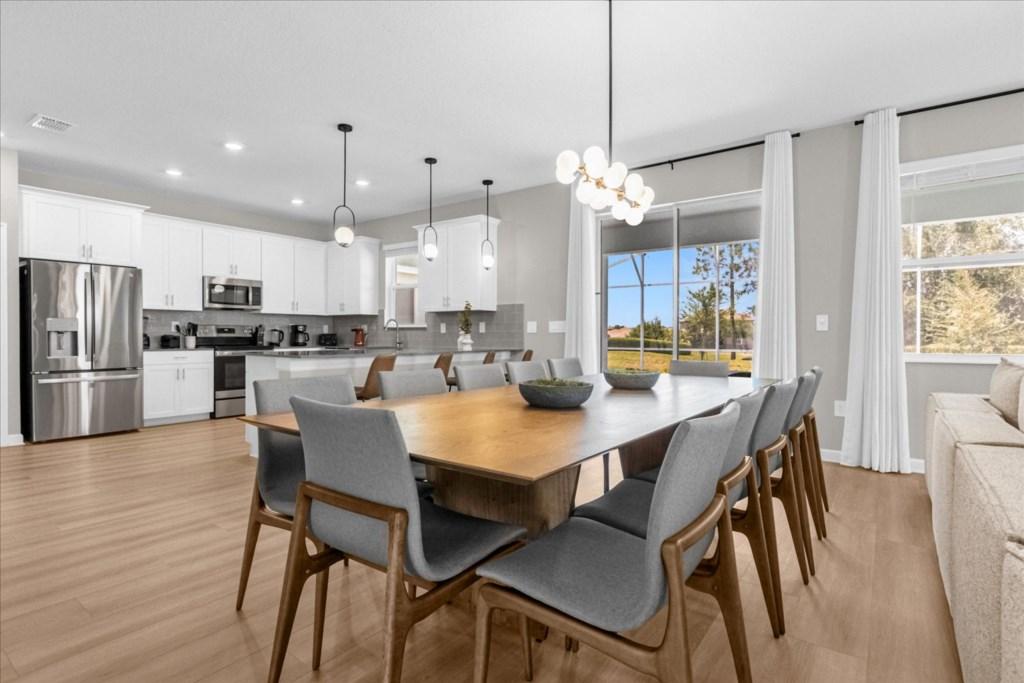
Indoor dining that connects to the outdoor space makes group meals easier.
Shade comes first
A deck with no shade is empty at midday. Plan shade before you plan furniture. A covered lanai, a pergola, a shade sail or well-placed umbrellas give guests a place to sit while the sun is strongest. Umbrellas need a base that is heavy enough to stay put in the wind, and they need to be closed when no one is using them. Check your HOA rules before adding any structure.
Choose materials that survive Florida
Outdoor furniture in a rental has to handle sun, rain, humidity and chlorine. Ask the maker how each piece is built and how it should be cleaned:
Frames: rust-resistant metal or sturdy synthetic frames last better than raw steel or untreated wood.
Woven pieces: outdoor-rated resin weave holds up better than indoor wicker.
Cushions and fabrics: outdoor-rated fabrics resist fading and dry faster. Cushions that stay damp can grow mildew.
Tables: a surface that doesn't scratch easily and can be wiped down. Glass tops can be heavy and risky near a pool, so think about safety.
Hardware: stainless or coated hardware resists rust.
Avoid anything labeled indoor-only, even if it looks right. It will fade and fall apart quickly.
Think about wind and weather
Florida weather can be fierce. A light chair on a lanai can fly across the deck in a storm, and a heavy one can fall into the pool. Choose pieces heavy enough to stay put in normal wind, and have a plan to secure or store loose items when severe weather is forecast. Tell your manager or cleaner who is responsible, so it isn't forgotten before a storm.
Make cushions easy to manage
Cushions are the part of outdoor furniture that wears fastest. Choose ones that drain and dry quickly, with covers that can be removed and washed. A deck box or storage bench keeps cushions dry between stays, and it gives cleaners somewhere to put them. A fresh set of cushions for photos makes a big difference, so plan to replace them when they look tired.
Light the space for the evening
Guests use the lanai after dark. Soft, low lighting makes the space feel inviting and helps people move safely. String lights, lanterns or low landscape lights add atmosphere. Plan lights near steps and the pool edge for safety. Check that outdoor fixtures are rated for outdoor use, and have a qualified electrician handle any wiring. Our LED lighting guide covers the thinking behind layered lighting.
Add a few details that guests notice
A place to hang wet towels, so they don't end up on the furniture.
A table or ledge near the pool for drinks and phones.
A trash can that guests can find, with a lid.
Plants in sturdy pots that survive the sun and are easy to water, or good-looking artificial ones.
A clear walkway from the door to the pool that isn't blocked by furniture.
Keep furniture from becoming a climbing aid
Around a pool, think about what a child could climb. Keep tables, chairs and planters away from pool barriers, fences and gates, so furniture can't be used to get over them. Check local pool safety rules and your insurer's requirements, and ask a qualified professional about barriers and alarms. Keep heavy furniture stable and avoid sharp corners near the water's edge. A clear, tidy deck is safer, and it photographs better too.
Keep it clean and replace what wears out
Outdoor furniture needs regular care. A quick wipe at each turnover, a deeper clean on a schedule and a check for loose hardware, frayed cushions and rust keep the space looking good. Agree who is responsible, and replace pieces that no longer look right. Photos of a tired lanai cost more than the replacement.
Where outdoor furniture fits in the whole plan
The outdoor space is one of several rooms we plan together. Our amenity planning guide explains how to order the whole list, and our furnishing checklist includes the lanai. For townhomes where the patio is the whole backyard, see our townhome design guide.
Common outdoor furniture mistakes
Buying indoor furniture for an outdoor space.
No shade, so the deck sits empty.
Furniture too light for the wind.
Cushions that stay wet and grow mildew.
A table that doesn't seat the group.
Ignoring HOA rules until after delivery.
Frequently asked questions
What outdoor furniture holds up best in Florida?
Rust-resistant frames, outdoor-rated weave and fabrics, and surfaces that wipe clean. Avoid anything made for indoor use.
Do I need shade on the lanai?
Yes. Without shade the space is empty at midday. Check your HOA rules before adding a structure.
How do I protect cushions?
Choose quick-drying outdoor fabrics, use removable covers and store cushions in a deck box between stays.
How do I handle storms?
Choose heavy pieces, and agree who secures or stores loose items when severe weather is forecast.
Can you plan the outdoor space with the interior?
Yes. We plan the lanai alongside the rest of the house so the style matches.
How do I start?
Send us your resort, the floor plan and your listing link. We'll tell you which rooms to build up first.
Get a quote for your home
Tell us about your home, the resort it's in and the rooms you have in mind, and we'll put together a plan and a quote. Get my quote or call us at 689-777-9954.
Supreme Interior Design, 3401 Commerce Blvd Suite I, Kissimmee, FL 34741.
