

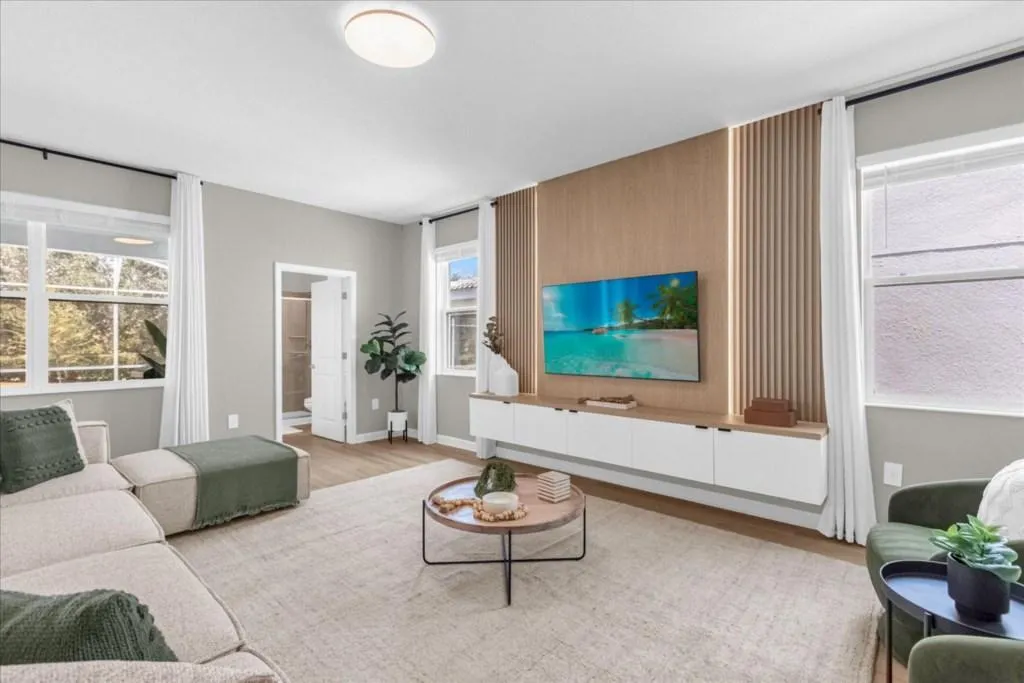
Designer vs Decorator vs Stager for a Vacation Rental
Owners often use designer, decorator and stager as if they meant the same job. They don't. Each one solves a different problem at a different stage, and hiring the wrong one for the job you have is how owners end up paying twice.
This guide is about roles: who plans, who styles and who gets the house ready for photos. If you're comparing a design company with a furniture package company, that's a separate question, and we cover it in designer versus furniture package. Our vacation rental interior design in Orlando service covers this from the first plan to the install.
The designer: plans the house
A designer works on the structure of the house before anything is bought. In a vacation rental that means the layout, how many guests each room will sleep, which rooms should be bunk rooms or themed rooms, where the game room goes, what the lighting should do and which materials will survive guests.
Space planning and sleep counts.
Choosing a direction for the house and each special room.
Specifying furniture, finishes, lighting and custom pieces.
Drawings or plans you can approve before the money is spent.
Coordinating the people who build and install.
Hire a designer when you're starting from an empty or outdated house, when you want themed rooms or a bunk build, or when you aren't sure what the house should be.
The decorator: styles the rooms
A decorator works with the surface: color, fabric, pillows, art, lamps, rugs and the small things that make a room feel finished. The work usually happens after the layout and the large furniture are settled. A good decorator can make a plain room feel warm and give a house a consistent look from room to room.
Paint and color schemes.
Bedding, curtains and rugs.
Wall art, mirrors and lamps.
Accessories that match the style of the house.
Hire a decorator when the bones of the house already work and you want it to feel more finished. A decorator isn't the right person to plan a bunk room or to decide how many people a house should sleep.
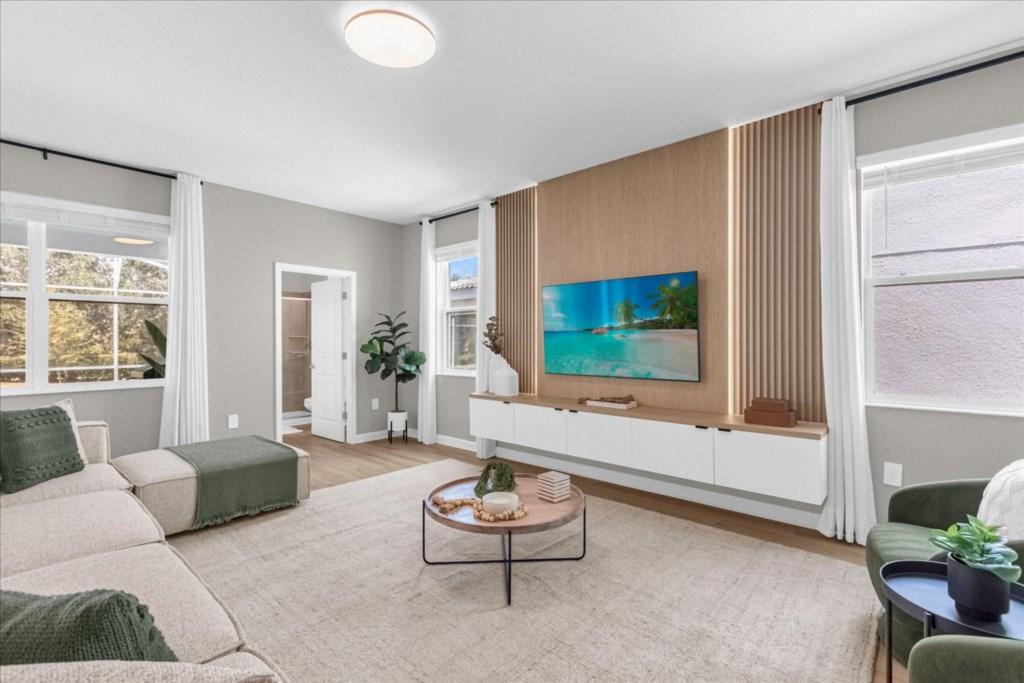
The layout and the large pieces are the designer's job. The finishing touches are the decorator's.
The stager: gets the house ready to be photographed
A stager prepares a finished house for the camera or for a showing. That means arranging furniture for the best angles, editing out clutter, adding fresh linens and making each room read clearly in a photo. Staging is the last layer, not the first. It can't fix a layout that doesn't work, but it can make a good house look like one.
For the photo side, our guides on staging your vacation rental for listing photos and photographing a themed room go into detail.
Where the jobs overlap
In practice the lines blur. Many designers also decorate. Many decorators also stage. The title matters less than what the person will actually do for your house. Ask each provider to describe the work they'll do, what they leave to you and who builds, orders or installs the pieces.
Who plans the layout and the sleep count?
Who orders the furniture and who assembles it?
Who builds custom pieces such as bunks or printed walls?
Who styles the house at the end?
Who do I call when something arrives damaged or doesn't fit?
Titles and licensing rules differ by state and by type of work. Ask anyone you hire what they are and aren't licensed or insured to do, and get the scope in writing.
The question owners forget: who builds it?
Many designers and decorators don't build anything. They draw it and hand it to someone else. That's fine for a standard house, but for a bunk room or a themed room, a gap between the person who drew it and the person who builds it is where mistakes happen. We design and build custom pieces in our own Kissimmee shop, so the plan and the build stay with the same team.
How the roles fit together on one project
On a full project the work usually runs in this order. The designer plans the layout, the sleep counts and the special rooms. The custom pieces are built while the standard furniture is ordered. Everything is delivered and installed. Then the finishing layer goes on: linens, art, lamps and styling. Last, the house is prepared for photos. If you only need the furniture, see our vacation rental furniture packages in Orlando and Florida.
You can see why one team that can do the whole chain keeps things simple. When the plan, the build, the furniture and the styling sit under one roof, nothing falls between two people who each think the other one was handling it.
Deciding how much to do yourself? Turnkey versus DIY furnishing is a fair look at that, and where owners overspend shows where design money goes furthest.
Mistakes owners make when hiring
Hiring a decorator to solve a layout problem.
Hiring a designer who draws a plan and then leaves the owner to find a builder.
Skipping a written scope, so nobody knows who orders what.
Choosing on style alone, without asking how the pieces will hold up to guests.
Thinking staging will fix a house that doesn't work for groups.
What to ask any provider before you sign
What exactly will you deliver, and what do I still have to do?
Do you build custom pieces yourselves, or hand them to someone else?
Who orders the furniture, and who is responsible if it arrives wrong?
How do you handle changes once the plan is approved?
Can I see finished rooms like the one I want?
What does the quote include, and what could change it?
The answers tell you more than the title on a business card. A provider who can answer all six clearly is usually one you can work with.
Our furnishing checklist gives you a room-by-room list to compare scopes against.
Which one do you need?
Empty or dated house, or special rooms planned: a designer who also builds, or a team that does both.
Working layout that feels flat: a decorator.
Finished house that needs listing photos: a stager or a photographer who stages.
Complete turnkey from start to listing: one team that covers design, building, furnishing, install and styling. See our turnkey vacation rental page.
If you're picking a designer, our guide on how to choose a vacation rental interior designer lists the questions to ask.
Frequently asked questions
Is a decorator cheaper than a designer?
It depends on the scope. A decorator's job is usually narrower, so it can cost less when the layout already works. When the house needs planning, a decorator alone can leave problems unsolved.
Do I need a stager if I hire a designer?
Not always. A designer who finishes the house to be photographed covers the staging. If your designer stops at the plan, you may want someone to style the house before the photos.
Can one company do all three?
Yes. We design, build, furnish, install and style, so you don't have to coordinate separate people. See turnkey vacation rental design.
What's the difference between a designer and a furniture package company?
A package company sells and delivers a set of furniture. A designer plans the house first. Read our comparison of designer versus furniture package.
Who should I hire for a themed room or a bunk room?
Someone who designs and builds. These rooms depend on carpentry, lighting and printed walls working together, so the plan and the build should stay with the same team. See our bunk rooms.
How do I start?
Send us your floor plan, photos and listing link. We'll tell you whether you need a full design, a refresh or just styling, and give you a quote.
Get a quote for your home
Tell us about your home, the resort it's in and the rooms you have in mind, and we'll put together a plan and a quote. Get my quote or call us at 689-777-9954.
Supreme Interior Design, 3401 Commerce Blvd Suite I, Kissimmee, FL 34741.
